


| Category | Ophthalmology and Eye Surgery |
Cataracts are a common eye condition in which the natural lens becomes cloudy, causing blurred vision, glare, difficulty seeing at night, and reduced visual clarity. Cataracts often develop gradually with age, but they can also occur due to diabetes, eye injuries, certain medications, or other medical conditions. Cataract surgery in Noida helps remove the cloudy natural lens and replace it with an artificial intraocular lens (IOL) when the condition begins to interfere with daily activities.
At SKINNEYE Plastic & Eye Surgery, patients can enquire about cataract evaluation, available surgical options, and appropriate intraocular lens choices. The right treatment depends on the severity of the cataract, overall eye health, lifestyle needs, and the presence of other eye conditions. A comprehensive examination by a qualified ophthalmologist helps determine whether surgery is necessary and which approach may be suitable.
Cataract surgery is commonly performed and is generally associated with good visual outcomes when no other significant eye disease limits vision. However, results vary between individuals, and surgery cannot guarantee perfect vision or eliminate the need for glasses in every situation.
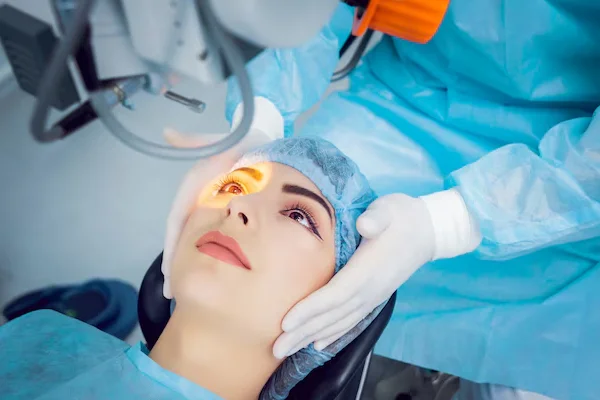
Cataract surgery is a procedure in which the cloudy natural lens of the eye is removed and usually replaced with a clear artificial lens called an intraocular lens. The procedure aims to improve the passage of light through the eye and restore visual clarity when cataracts are responsible for the vision problem.
Modern cataract surgery commonly uses a small incision and ultrasound energy to break up and remove the cloudy lens. The artificial lens is then placed inside the eye. The specific technique depends on the patient's eye condition, the cataract's characteristics, and the surgeon's assessment.
Cataract surgery is generally recommended when vision loss affects activities such as reading, driving, recognising faces, working, or moving around safely. Surgery is not usually required immediately after a cataract is diagnosed if vision remains adequate for daily life.
Cataract symptoms often develop slowly and may initially be mistaken for a need to change glasses. Common symptoms include:
Blurred, cloudy, or hazy vision
Increased sensitivity to bright light
Glare from headlights or sunlight
Difficulty driving at night
Colours appearing faded or less vivid
Frequent changes in glasses prescription
Difficulty reading in low light
Double vision in one eye in some cases
Reduced clarity despite updated spectacles
These symptoms can also occur with other eye conditions. An eye examination is important to confirm whether cataracts are responsible and to identify other possible causes of reduced vision.
Age-related cataracts are the most common type and develop as the natural lens changes over time. They may progress gradually and affect daily activities as the lens becomes increasingly cloudy.
Nuclear cataracts affect the central part of the lens. They may cause gradual blurring and changes in distance vision. Some people also experience temporary changes in their ability to read without glasses.
Cortical cataracts develop around the outer edges of the lens and may extend towards the centre. They can cause glare, light sensitivity, and difficulties with contrast.
These cataracts develop near the back surface of the lens and may affect vision more quickly than some other types. Glare and difficulty reading in bright light can be prominent symptoms.
Cataracts may develop due to diabetes, certain medications such as corticosteroids, previous eye surgery, or eye injuries. Treatment planning depends on the cause and any associated eye damage.
Cataract surgery may be recommended when the clouding of the natural lens significantly affects vision or quality of life. A qualified ophthalmologist assesses the cataract and the overall health of the eye before recommending treatment.
You may benefit from an assessment if you:
Experience persistent blurred or cloudy vision.
Have difficulty reading, driving, or recognising faces.
Notice increasing glare from lights.
Find that updated glasses no longer improve vision adequately.
Have cataracts that interfere with work or daily activities.
Need cataract treatment as part of managing another eye condition.
The decision to undergo surgery should be based on visual needs, examination findings, and the expected benefits and risks. The presence of a cataract alone does not always mean immediate surgery is necessary.
Phacoemulsification is a widely used cataract surgery technique. The surgeon makes a small incision and uses ultrasound energy to break the cloudy lens into smaller pieces, which are then removed. An artificial intraocular lens is placed inside the eye.
The small incision generally allows recovery without stitches, although the exact approach depends on the individual case. This technique is commonly used for many routine cataracts.
Manual small-incision cataract surgery involves removing the cloudy lens through a small surgical opening and inserting an artificial lens. It may be appropriate for selected cataracts, including some that are more advanced.
The choice between techniques depends on the cataract's maturity, eye anatomy, available facilities, and the surgeon's clinical judgement.
In selected settings, a femtosecond laser may be used to assist with certain steps of cataract surgery. Its availability and suitability vary. Laser assistance is not necessary for every patient and does not guarantee better vision than other appropriate surgical techniques.
Some patients have cataracts alongside conditions such as glaucoma or other eye disorders. In selected cases, combined procedures may be considered. The decision depends on the condition being treated, the potential benefits, and the risks of combining procedures.
An intraocular lens replaces the cloudy natural lens removed during surgery. Several lens types are available, and the best choice depends on the patient's visual needs, eye measurements, lifestyle, and budget.
A monofocal lens is designed to provide clear vision at one main distance, often distance vision. Glasses may still be needed for reading or other tasks, depending on the lens power selected and the patient's visual requirements.
A toric lens is designed to correct certain amounts of corneal astigmatism along with the cataract. It may reduce dependence on glasses for some distances, but glasses can still be required.
Multifocal lenses are designed to provide vision at more than one distance. They may reduce the need for glasses for selected activities, but some patients experience glare, halos, or reduced contrast. They are not suitable for every eye condition or lifestyle.
Extended depth of focus lenses are designed to provide a broader range of vision, particularly from distance into intermediate ranges. Reading glasses may still be required for small print or close work, depending on the lens and individual outcome.
Before selecting an intraocular lens, the ophthalmologist evaluates eye measurements, corneal health, retinal condition, existing astigmatism, and visual expectations. Patients should discuss the benefits, limitations, costs, and likelihood of needing glasses after surgery.
Cataract surgery is usually performed as a day-care procedure, meaning many patients return home on the same day. The steps generally include the following.
The ophthalmologist checks visual acuity, examines the lens and retina, measures eye pressure when indicated, and assesses overall eye health. The examination helps determine whether cataracts explain the symptoms.
Measurements of the eye help calculate the appropriate power of the intraocular lens. Additional tests may be needed if the patient has astigmatism, retinal disease, glaucoma, or other conditions.
The eye is prepared using appropriate antiseptic measures. Numbing eye drops are commonly used, although other forms of anaesthesia may be required in selected cases.
The surgeon removes the cataract using the selected technique. The method depends on the cataract's characteristics and the patient's eye condition.
A suitable artificial lens is placed inside the eye to replace the cloudy natural lens. The incision is checked at the end of the procedure.
The patient receives instructions about eye drops, protective measures, activity restrictions, and follow-up visits. The timing of recovery and return to routine activities varies.
When cataracts are the main cause of reduced vision, surgery may provide several benefits:
Improved visual clarity
Better perception of colours and contrast
Reduced cataract-related glare
Greater ease with reading and everyday tasks
Improved ability to recognise faces
Better visual function for selected activities
Potential reduction in dependence on glasses with certain lens options
The amount of improvement depends on the health of the retina, optic nerve, cornea, and other parts of the eye. Cataract surgery cannot reverse vision loss caused by unrelated eye diseases.
Many patients notice visual improvement within the first few days, although vision may fluctuate during early healing. Complete recovery varies, and some patients need more time before their vision stabilises.
After surgery, patients are usually advised to:
Use prescribed eye drops exactly as directed.
Avoid rubbing or pressing on the operated eye.
Use an eye shield if instructed, particularly while sleeping.
Avoid swimming and activities that expose the eye to contamination until cleared.
Avoid heavy lifting or strenuous exercise for the period advised by the surgeon.
Attend all postoperative appointments.
Use updated glasses when the ophthalmologist confirms that a new prescription is appropriate.
Contact the treating eye specialist urgently if you experience sudden vision loss, severe or increasing eye pain, rapidly worsening redness, new flashes or floaters, or a curtain-like shadow across your vision. These symptoms may indicate a serious complication.
Cataract surgery is generally safe, but complications can occur. Possible risks include infection, inflammation, bleeding, increased eye pressure, swelling of the cornea or retina, retinal detachment, lens-related problems, and the need for additional treatment.
Some patients continue to need glasses after surgery. A condition called posterior capsule opacification can cause vision to become cloudy again months or years later; it can often be treated with a laser procedure when indicated.
The surgeon should explain the risks that are relevant to the patient's eye health and the expected benefits before surgery.
SKINNEYE Plastic & Eye Surgery provides a point of contact for patients seeking information about eye care and cataract-related treatment pathways in Noida. Cataract surgery requires a detailed ophthalmic examination, accurate lens measurements, suitable surgical facilities, and postoperative monitoring.
Patients should confirm the availability of a cataract surgeon, the surgical facility where the procedure will take place, the available lens options, and the follow-up arrangements before proceeding. If another eye condition is affecting vision, the ophthalmologist should explain how it may influence the expected result.
Individual Eye Assessment
A comprehensive examination helps identify cataracts, assess overall eye health, and determine appropriate treatment options.
Personalised Lens Selection
Intraocular lens choices should reflect eye measurements, visual priorities, lifestyle needs, and realistic expectations.
Clear Treatment Guidance
Patients should understand the surgical process, expected recovery, possible complications, and the need for postoperative care.
Function-Focused Eye Care
Cataract treatment aims to improve vision when lens clouding is responsible for everyday visual difficulties.
Informed Patient Decisions
Discussion of surgical techniques, lens options, costs, and limitations supports a well-informed treatment decision.
Follow-Up and Recovery
Postoperative reviews and prescribed eye care help monitor healing and identify potential complications promptly.
If blurred vision, glare, or difficulty with everyday activities may be related to cataracts, an eye examination can help determine the cause and appropriate next steps.
Contact SKINNEYE Plastic & Eye Surgery in Noida to enquire about cataract assessment and the availability of a qualified ophthalmologist for surgical care. Ask about preoperative testing, intraocular lens options, surgical arrangements, and follow-up support before making a decision.
Cataract surgery removes the cloudy natural lens of the eye and usually replaces it with an artificial intraocular lens. The procedure aims to improve vision when cataracts interfere with daily activities.
Surgery may be appropriate when cataracts affect reading, driving, work, or other daily activities and the ophthalmologist confirms that the cataract is responsible for the vision problem. The decision depends on individual needs and examination findings.
The procedure is generally performed using numbing eye drops or another appropriate form of anaesthesia. Patients may experience mild discomfort or irritation afterward, but significant pain should be reported promptly to the treating eye specialist.
The operation itself often takes around 10–30 minutes for an uncomplicated case, although preparation, monitoring, and recovery increase the total time spent at the facility. Complex cases may take longer.
Many patients notice improvement within a few days, while vision may take several weeks to stabilise. Recovery depends on eye health, the surgical procedure, and whether complications occur.
Some patients still need glasses, especially for reading or close work. The level of dependence depends on the intraocular lens selected, the eye's measurements, and the visual result.
There is no single best lens for everyone. Monofocal, toric, multifocal, and extended depth of focus lenses have different benefits and limitations. An ophthalmologist can recommend suitable options after examining the eyes and discussing visual goals.
Cataract surgery is commonly performed in older adults, but suitability depends on overall health, eye conditions, medications, and anaesthesia considerations. A preoperative assessment helps evaluate individual risks.
The removed natural lens does not develop another cataract. However, the capsule supporting the artificial lens can become cloudy over time. This is called posterior capsule opacification and can often be treated with a laser procedure when necessary.
You can contact SKINNEYE Plastic & Eye Surgery in Noida to enquire about cataract assessment and surgical services. Confirm that a qualified cataract surgeon, appropriate surgical facilities, lens options, and postoperative follow-up are available.


